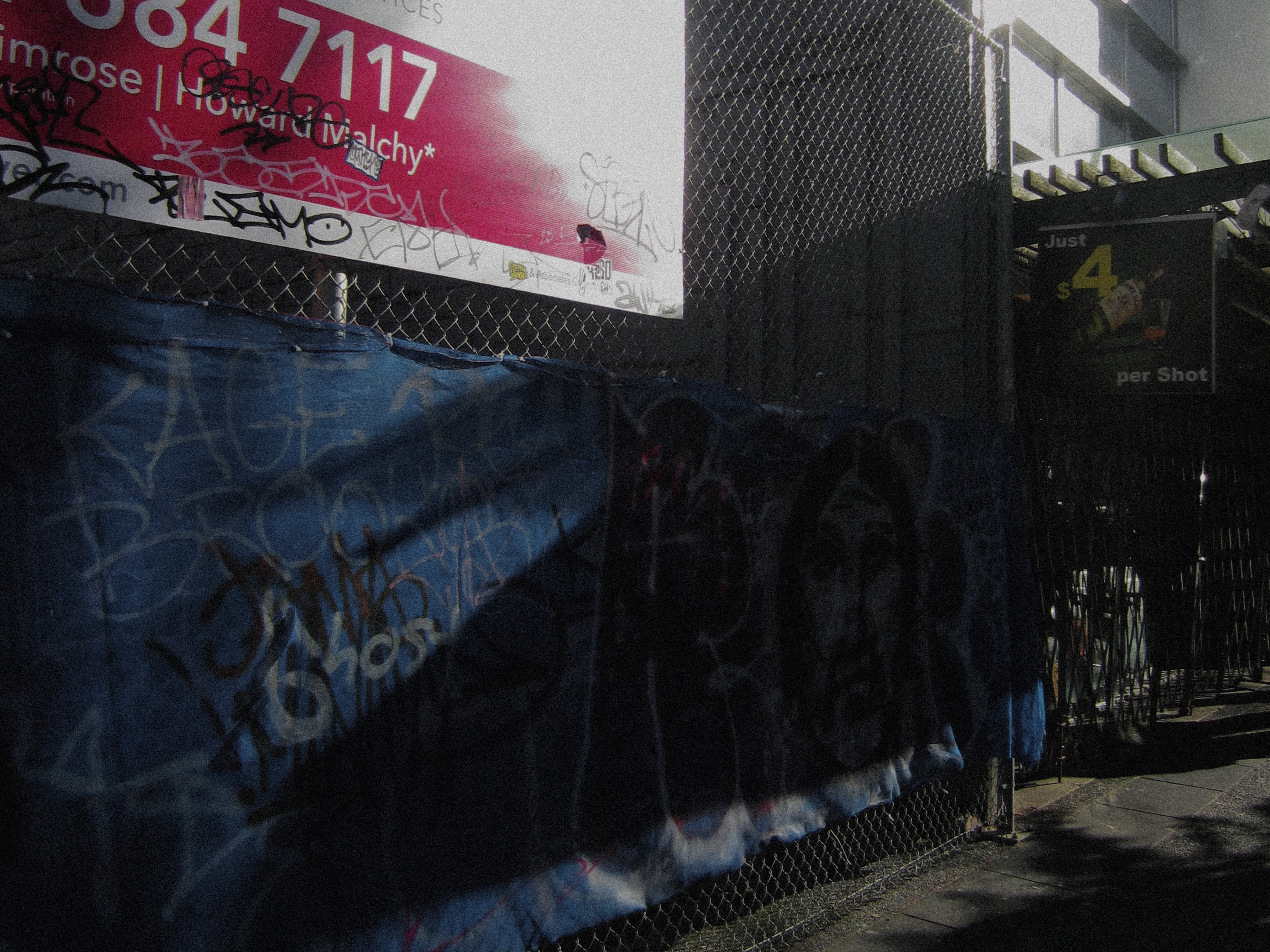
In the city of Vancouver’s Downtown Eastside, policies are widely debated from many angles in the government. These discussions can sometimes feel abstract, framed around numbers and timelines. An example I concern myself with in particular is housing, where the issue at its core is lived experience, not financial viability. Having spent a lot of time near the area doing volunteer work, I think of housing policy less as an ideological and numerical debate and more as a practical question: whether housing functions as a place to stay.
In mid-December of 2025, Vancouver made a couple of changes to its zoning and social housing policies. Previously, in the Oppenheimer District, new rental buildings had to be at least 60 percent social housing, with at least a 1/3 of that to be affordable to residents living with social assistance. Under the new policy, buildings may be built up to 32 stories tall. Additionally, in mixed-rental developments, required social housing would drop from 60 percent to 20 percent, and within social housing buildings themselves, the amount of units rented at shelter assistance rates would drop from 1/3 to 20 percent. This means that for a building with 100 units, only 4 would need to be rented at the shelter rate price of $500, compared to 12 units under the current zoning.
City officials explained it was a way to increase financial viability, the delivery speed of new development, and improve conditions in deteriorating stock. There has been a long history of revitalization action taken to support failing single-room occupancy (SRO) hotels with adequate living conditions, with an example being the 2017 SRO Revitalization Action Plan. A deeper dive into city statements produces another objective to be to support the creation of a “more resilient neighbourhood with new housing stock”.
Despite this clear objective, CBC News Reporter Chad Pawson reports it could foster political consequences for current Mayor Ken Sim and his ABC party. Jean Swanson, a former city councillor, criticized the plan, stating, “the uplifting motion does absolutely nothing to address homelessness and ignores the need to house 2,000 people with no fixed address in the DTES.” There are also community concerns around displacement and gentrification, as well as long-term losses of neighbourhood character and affordability.
I was intrigued by the difference between the city’s arguments and the community’s concerns, so I sought to understand how these policies are experienced on the ground. To do so, I spoke directly with residents and NGO support providers in the area, selecting to interview participants from a range of backgrounds in order to observe how zoning decisions translated into daily lives. My methodology combined semi-structured qualitative interviews with stakeholder triangulation, drawing on various different perspectives from the heart of Vancouver itself to compare institutional rationales against frontline impacts in the DTES.
One housing advocate I spoke with—Kabir, from the Carnegie Housing Project—described how the issue is not that solutions are unknown, but that governments have failed to act at the scale required. He explained that “the type of housing that is required, we’ve known for a while,” but the challenge is finding ways to present research that can “actually convince the government” to act. He also emphasized that ending homelessness “has to be pushed forward by the three levels of government,” since it is not something the private market can solve on its own.
I then interviewed an anonymous person experiencing homelessness. They brought to my attention that policy changes framed as neighbourhood improvement can feel “obnoxiously insincere” to people living through the consequences, especially when rising prices and stricter eligibility requirements make it harder to stay housed. They explained that the Downtown Eastside is not full of people who are “failures as humans,” but people with “souls, dreams, ambitions, [and] skills” who could contribute much more if they were given real opportunities.
While resident experiences reveal the foremost and frontline effects of the policy, understanding it fully also requires examining the reason behind it. To accomplish this, I spoke with Vancouver city councillor Sean Orr to better understand the objectives and trade-offs during the decision-making process. I learned that while reduced affordability requirements are often defended as necessary for “viability” and “long-term sustainability,” Orr argued that this framing can ignore the urgency of people’s lives. As he put it, “when we talk about trade-offs and pragmatism, it leaves behind the human element,” because these decisions are ultimately about “people’s lives.”
The debate surrounding the zoning changes appeared to me to be departing with the desires of residents, advocates, and community members. The interviews I conducted revealed that a narrow group of stakeholders benefit: developers gain predictably from the reduced inclusionary requirements and expanded development permissions and can prioritize projects that maximize revenue expansion and feasibility. Political pressure further exacerbates these misaligned incentives, as visible progress during a candidate’s short electoral cycle becomes a priority. It was also brought to my attention that senior-government funding programs emphasize generally accelerated delivery and policies that favour quick construction over long-term well-being and stability. And as such, it became clear to me the divide between city officials focusing on progression under constraints, and residents concerned with day-to-day housing security. It remains a conflict to which I have no set answer to.
As land and housing prices rise, landlords and developers gain the upper hand over tenants, who are forced to absorb the consequences associated with redevelopment. This is the most accurately understood explanation of gentrification in the Downtown Eastside—an outcome of unequal housing power. Ownership acts as a protective layer from displacement, as those who hold ownership status can wait or negotiate, benefitting financially from change. On the other side, renters and buyers, particularly those in low-income or shelter-rate housing, experience changes as instability. My interviews highlighted that displacement and gentrification occur in patterns across different income levels. While revitalization protects those with assets by preserving or even increasing their housing security, it simultaneously undermines stability for those without ownership. In this sense, gentrification cannot be seen as equal to redevelopment but included as an inevitability within it.
Investigating the Downtown Eastside changed how I understand housing policy. I came to see it as a series of combined choices that influence who is protected and who is exposed, and recognize now that no matter the intention, there is always one party left more vulnerable than others. Writing this article taught me that meaningful change requires looking beyond the surface of decisions and asking who carries their consequences.
Leave a Reply